What Is The VidyaBuddhi (VB) Reading Skills Module?
Reading Practice That Finally Fits Into The Child’s Day
Ask any teacher if reading practice matters. The answer is always yes. Then ask when it happens. The answer is usually a pause, a smile and "we try." With a full classroom, a packed timetable and a syllabus to complete, reading practice can easily get pushed aside.
The VB Reading Skills Module makes the room.
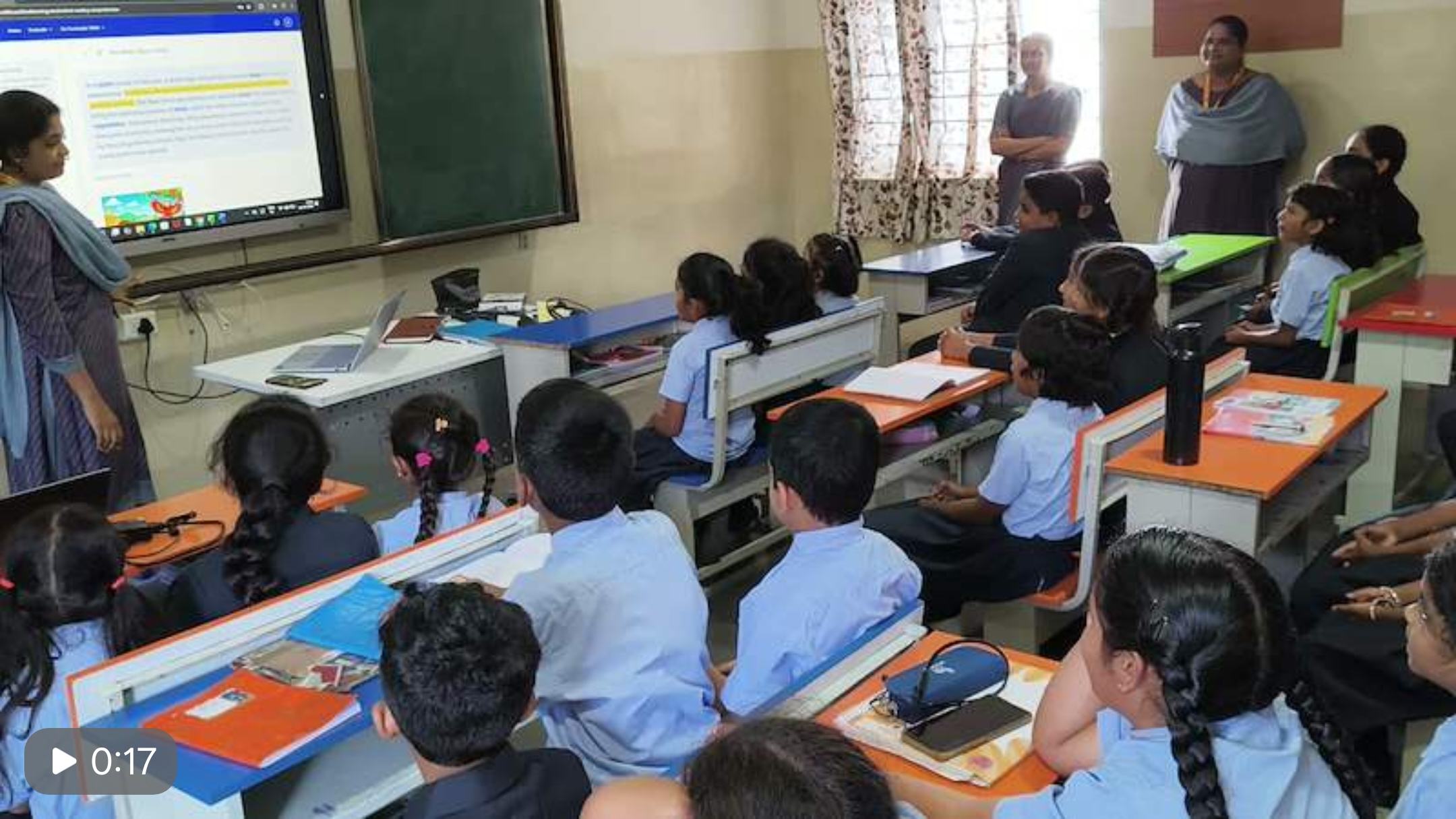
It starts out as a teacher-led reading tool and transforms into a home-reading tool. Each child gets to read a passage matched to their interest and their current reading level. They practise. The AI listens and scores their reading. The teacher sees how everyone is doing and is able to enrich the advanced readers and remedy the beginners, to achieve national standards for each grade.
Built On IIT Bombay’s TARA
Reading assessment in VidyaBuddhi is powered by TARA (Teacher’s Assistant for Reading Assessment). TARA was developed at IIT Bombay by Prof. Preeti Rao.
- Approved by NCERT
- Recognised by the Union and State Ministries of Education
- Used in all 1,250 Kendriya Vidyalayas to measure reading fluency in English and Hindi for all students in grades 3 to 8, three times a year.
- MyTARA app, launched recently, enables parents to help their child practice reading a short paragraph at home, every day

TARA and MyTara are now integrated into VidyaBuddhi, through a partnership between Sambhuti Learning and Prosical Language Technologies, signed at IIT Bombay’s SINE incubator by Prof. Preeti Rao, the CEO of Prosical, and our CEO Umamaheshwar Ragi.
Why Reading Matters
The Child Who Can Solve The Sum But Can’t Get To It
Picture a Class 4 student who loves maths. Give her a sum on the board and she is quick. Now give her the same sum as a word problem, wrapped in a paragraph about a train, two stations and a shopkeeper. She slows down. Not because she can’t do the maths. Because she’s still working her way through the words. That is what reading does. It sits in front of every other subject.
First Learn To Read. Then Read To Learn.
- Till Class 2, children are learning to read. Words, sounds, small sentences.
- From Class 3, the textbook takes over. Maths questions come as paragraphs. Science experiments come as instructions. Social studies comes as long passages.
- Reading stops being a subject. It becomes the way every subject is learned.
Why Fluency Changes Everything
Research suggests the difference comes down to how much of the mind reading uses up in reading.
About 20%
About 80% to think, understand and remember
About 80%
About 20% to understand the chapter
Same child. Same intelligence. Very different amount of room to learn.
This is why a child can be gifted at maths or science and still find class hard. The talent is there. Reading is what stands in the way.
What Strong Readers Gain
Words
They meet thousands of academic words that never come up in everyday talk. Vocabulary grows quietly, without effort.
Confidence
Better reading leads to better writing and better speaking. They answer, argue and explain with more ease.
Habit
A child who reads comfortably picks up the next book. And the next.
Why Early Practice Matters
A child who finds reading tiring will, quite naturally, avoid books. Fewer books mean fewer new words. Fewer words make reading harder. The gap widens a little each year.
The good news is that it works the other way too. Regular practice, with the right support, turns the circle around.
It’s a national goal, too
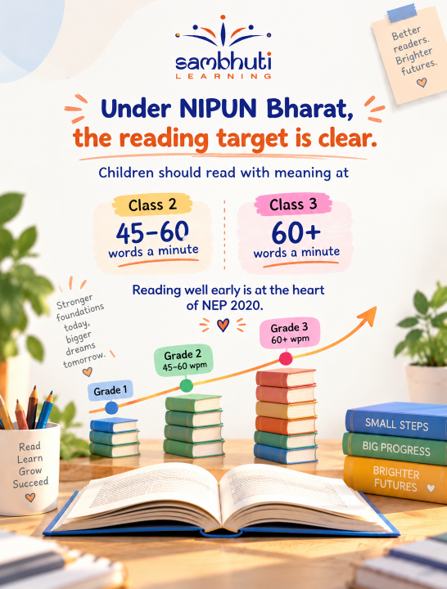
Under NIPUN Bharat, the target is for children to read with meaning at 45 to 60 words a minute by Class 2, and at least 60 words a minute by Class 3. Reading well early is at the heart of NEP 2020.
What Is Reading Fluency?
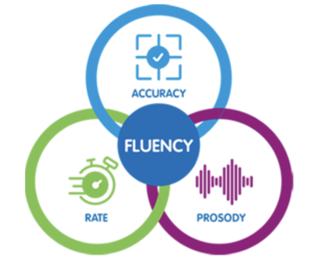
Good reading has three parts
- Speed. Reading at a pace that lets you understand. The goal is not to be the fastest. It is to be comfortable.
- Accuracy. Reading the words correctly. A fluent reader recognises words without struggling and says them rightly.
- Expression. Reading with the right tone, pauses and feeling. This is what brings a story to life, and helps a child understand how a character feels.
Who Benefits And How?
One module. Everyone in the classroom gains something.
For Students
For the child who goes quiet when asked to read aloud.
- Practise in a space where mistakes are just part of learning
- Read passages that match their interests and their level
- Hear words said correctly, and see meanings in their own language
- Build the confidence that follows them into every subject
For Teachers
For the teacher who wishes there were more hours in the week.
- Know exactly where each child stands, without listening to forty recordings
- Get back time. The module is designed to free up 5 to 8 hours of teacher time every week
- Stay in charge. You decide the level, the pace and who gets what
- Spend the time you save on what only a teacher can do: encourage, explain and notice
For Parents
For the parent who asks, "How is my child actually doing at reading?"
- Their child practises reading at home, every day, not just before exams
- Progress is measured in clear numbers, so teachers have something concrete to share
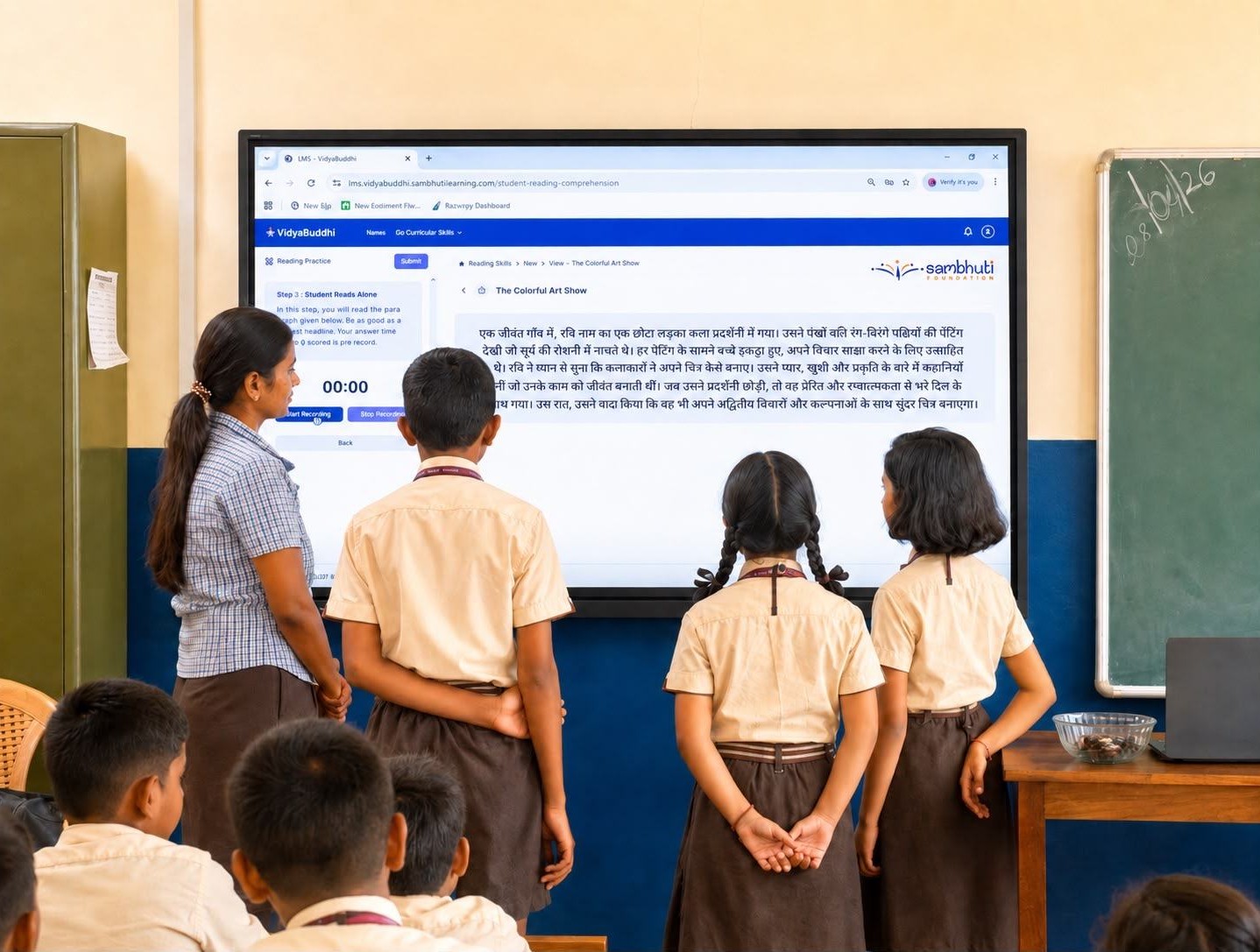
- Practice happens in English and Hindi and regional languages in the future, so children grow in the languages around them
For School Leaders
For the principal who wants to see foundational literacy move, not just hear that it is.
- Reading data across classes, at the start, middle and end of the year
- A practical way to build foundational literacy, in step with NEP 2020 and NIPUN Bharat
- An assessment already trusted by NCERT and Kendriya Vidyalayas
How It Works
Step 1: Find Out Where Every Child Is.
Reading is checked at the start of the year, in the middle and at the end. We look at speed, accuracy and expression. Short check-ins every two weeks show how each child is growing.
Step 2: Practise In Three Simple Steps.
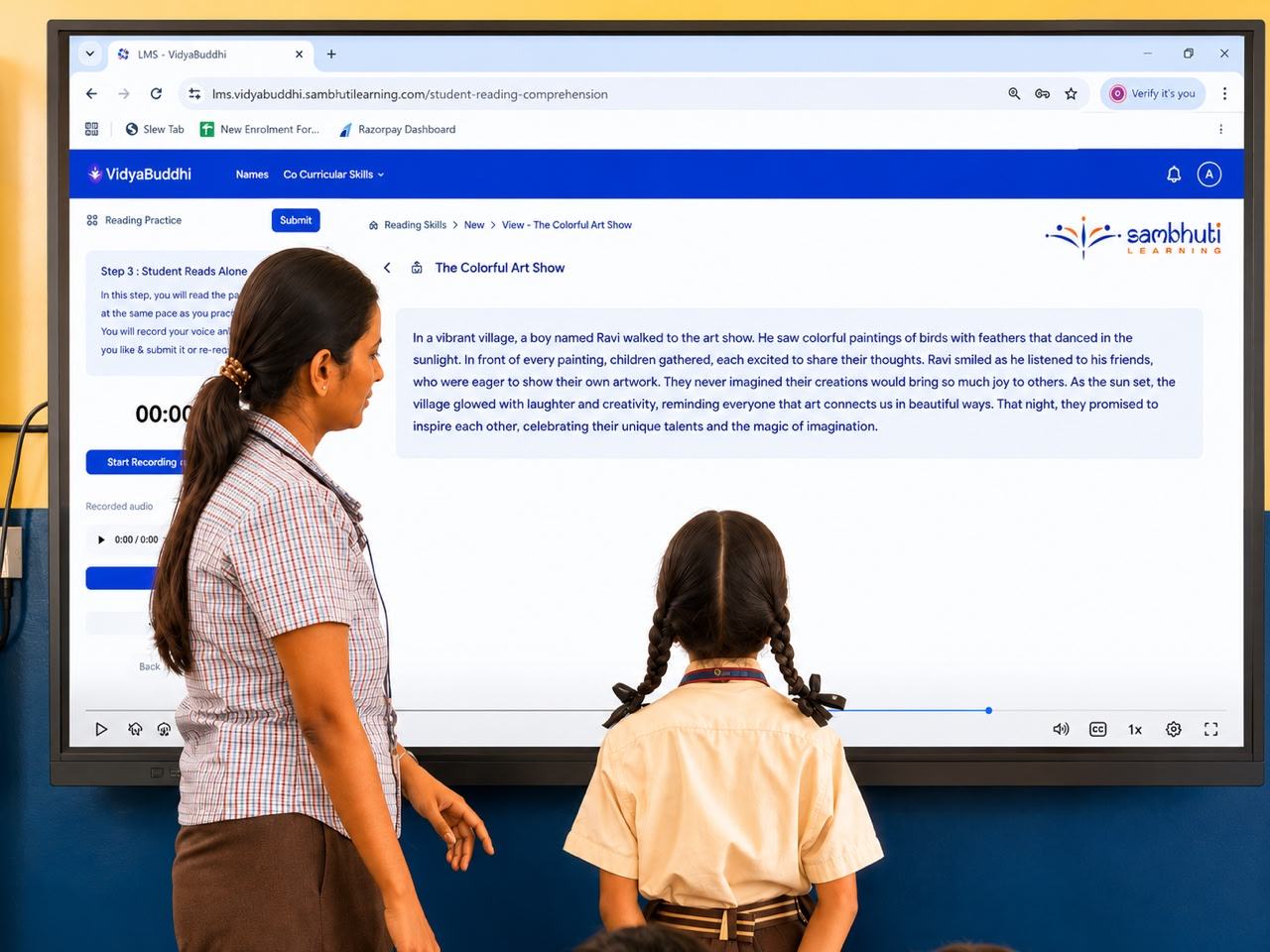
Hears the passage read aloud while following the words
They hear what good reading sounds like: the pauses, the tone, the right pronunciation
Reads along as the words are tracked on screen
Reading together feels safe. Nobody is watching for mistakes
Reads the passage alone and records it
Builds stamina, speed and the confidence to read without help
Step 3: Help Arrives At The Right Moment.
When a child is stuck on a word, they get to look up the pronunciation and the meaning in their own language. They don’t have to stop and wait for someone to come around.
Step 4: Parent-teacher Collaboration.
Teachers assign for the student to practice reading at home, with parental support, the passages they have practiced reading in groups at school. At the end of a week of practice, the student records their reading of the passage, at home. The consistency of daily practice matters a lot. It helps build fluency, vocabulary, and self confidence-life skills.
Step 5: The Teacher Sees Everything.
A simple dashboard shows each child’s reading progresses in terms of speed and accuracy as it happens. They also get a recording of each child with detailed markings of what the child read correct and what he or she missed. No guessing.
A method teachers already trust
Reading aloud, then together, then alone is one of the oldest and best-tested ways to teach reading. Teachers know it as "I do, we do, you do."
VidyaBuddhi doesn’t replace it. It makes sure it actually happens, every week, for every child.
It Meets Every Child Where They Are
- A child who needs more time gets easier passages to build up their confidence and reading accuracy. The teacher can adjust the level.
- A child who is racing ahead, scoring above the 75th percentile, unlocks comprehension tasks, essays and debates.
- Same classroom. Same passage theme. Different pace.
See It In Action
From a single passage to a whole classroom’s progress